

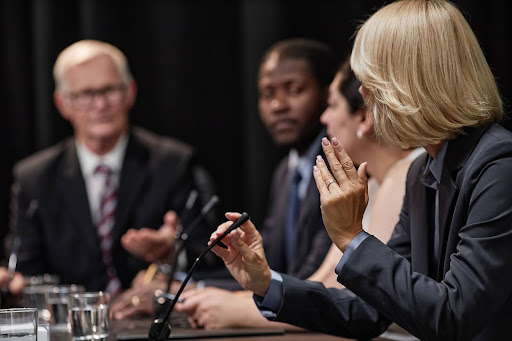
Simultaneous interpretation plays a vital role in Canada’s multilingual society. It ensures real-time communication across language barriers during international conferences, court proceedings, government meetings, and medical consultations.
With Canada’s official bilingualism and growing immigrant population, high-quality interpretation is essential to maintain clarity, compliance, and inclusivity in multilingual environments. From corporate boardrooms in Montreal to healthcare settings in Quebec city, simultaneous interpretation enables accurate, immediate understanding between parties who speak different languages.
What Is Simultaneous Interpretation?
Simultaneous interpretation is the process of translating spoken language in real time. A professional interpreter listens to a speaker in one language and delivers the translation into another language almost instantly. This process happens continuously, often with only a one- or two-second delay, allowing audiences to follow the speaker without interruption.
Unlike consecutive interpretation, where the speaker pauses to allow translation after each sentence or segment, simultaneous interpretation occurs without pauses. It provides a seamless experience, making it ideal for live events such as global conferences, legal proceedings, and diplomatic summits.
Key components of a simultaneous interpretation setup include:
- Professional interpreters trained to work under pressure with minimal delay.
- Interpretation equipment, such as headsets, microphones, and transmitters.
- Interpreter booths, which are soundproof enclosures that allow simultaneous interpreters to work without distractions or audio interference.
This setup ensures that listeners receive clear, uninterrupted communication in their preferred language.
Simultaneous interpretation services
Average Cost of Simultaneous Interpretation in Canada
The average cost of simultaneous interpretation in Canada typically ranges from $100 to $250 per hour, depending on various factors. Interpretation services pricing in Canada is influenced by location, language pair, subject complexity, interpreter certification, and event duration.
For short assignments, simultaneous interpreters usually charge by the hour. Most professionals set a minimum booking requirement of 2–4 hours, even for brief events. For longer engagements, interpreters offer half-day (up to 4 hours) or full-day (up to 8 hours) pricing packages.
Rates increase for specialized or technical content such as legal, medical, or engineering topics due to the technical terminology involved. Simultaneous interpretation for high-stakes events like legal hearings or government negotiations may also require multiple interpreters working in shifts, which increases overall cost.
City-specific pricing varies across Canada
- Montreal and Quebec City, with their strong bilingual environments, often have more competitive interpreter availability, keeping prices in the mid-range.
- Ottawa, being the nation’s capital and a hub for government interpretation, tends to command higher rates due to demand for certified, security-cleared interpreters.
In general, urban centers with more international activity and government presence will see higher interpretation costs than smaller cities or remote areas.
Key Factors That Influence Simultaneous Interpreter Rates
Simultaneous interpreter pricing in Canada depends on multiple factors, including event type, language combinations, certification, delivery format, and interpreter experience. These elements affect not just the daily fee or hourly session rate, but also the level of preparation, team size, equipment rental, and logistics involved. Below are the most important pricing drivers:
Type of Event: Legal, Medical, or Conference
Simultaneous interpreter rates vary by the type of event, especially in specialized fields such as legal proceedings, medical consultations, or high-level business conferences.
- Legal interpretation often requires court-certified professionals familiar with legal terms and procedures.
- Medical interpretation demands accuracy in health-related terminology, often during high-stress situations.
- Conferences, especially on a larger scale, may involve simultaneous interpreting for international events with technical topics, requiring more preparation and equipment.
Events that involve sensitive content or a fast-paced environment demand higher skills, a standard setup (including an ISO-certified booth), and often, a full interpreting team, not just a single interpreter.
Number of Languages and Language Combinations
Adding more languages increases complexity and cost. A mid-sized event may require two or three language pairs, which means hiring multiple interpreters for each booth. Rare language combinations or dialects also command higher rates due to limited availability.
For smaller-scale meetings, interpreters may handle just one pair (e.g., English ↔ French), keeping the cost within a reasonable budget. However, multilingual events always require strategic planning to ensure seamless communication flow.
Certification Level and Professional Credentials
Certified interpreters, especially those with ATIO or CTTIC credentials, often charge premium rates. Certification signals the interpreter has passed rigorous exams in accuracy, ethics, and language proficiency.
For business or legal clients, working with a certified interpreter ensures a standard of quality and compliance. Clients looking for long-term interpreting partnerships or high-profile assignments should always prioritize verified qualifications.
On-Site vs Remote Simultaneous Interpretation
Delivery format also impacts interpreter fees:
- On-site simultaneous interpreting involves additional transportation fees, equipment rental, and time spent on logistics.
- Remote simultaneous interpreting using platforms like Zoom or RSI (Remote Simultaneous Interpreting), may reduce costs, especially for smaller scale meetings, but still requires strong internet infrastructure and technical preparation.
In-person interpreting offers better real-time control, while remote services are ideal when travel or venue constraints exist.
Interpreter Experience Level
Experienced interpreters with a long track record in technical topics, international events, or diplomatic settings often charge higher daily fees. They bring proven skill, quicker response time, and require less prep to maintain flow under pressure.
Newer interpreters may be suitable for smaller events, but high-stakes or large-scale interpreting sessions benefit from professionals with years of live event exposure. Investing in the right person for the job ensures a smoother experience and protects your brand’s credibility during global communication.
A guide to simultaneous interpretation: Process, use cases & benefits
Certified vs Non-Certified Interpreters
Choosing between a certified and non-certified interpreter affects service quality, legal compliance, and overall communication flow. Below is a comparison to help organizations make informed decisions:
| Certified Interpreter (Canada) | Non-Certified Interpreter | |
| Credentialing Body | ATIO, CTTIC, or other provincial regulatory organizations | No formal certification body |
| Language Accuracy | Tested and verified through standardized exams | Varies by individual; no formal quality guarantee |
| Legal Compliance | Meets court and government interpretation standards | May not be accepted in legal or official proceedings |
| Industry Trust | Preferred by interpreter agencies and public institutions | Often not recommended for high-stakes events |
| Specialized Knowledge | Trained in legal, medical, and technical terminology | May lack expertise in specialized fields |
| Cost | Higher, but justified by skill and reliability | Lower, but risk of errors or miscommunication |
| Availability | Found through certified interpreter databases and agencies | May be harder to vet for quality and professionalism |
| Use Case | Conferences, courts, hospitals, business meetings | Informal settings or low-risk internal meetings |
Hiring a certified interpreter in Canada ensures legal reliability, improved accuracy, and better overall event performance, especially for business, government, or healthcare use cases.
What’s the difference between a translator and an interpreter?
Simultaneous Interpretation Equipment and Technical Setup Costs
Simultaneous interpretation requires more than just skilled interpreters, it demands a reliable technical setup to support real-time multilingual communication. The core elements include:
- Interpretation equipment rental (transmitters, receivers, mixers)
- Booth setup (soundproof interpreter booths, typically ISO-certified)
- Headsets and microphones for audience and interpreter clarity
For in-person events, these components are often provided by vendors who specialize in AV and interpretation support. Event organizers can also use in-house solutions if their venue includes integrated systems, but this is less common.
Industry-Specific Pricing Examples
Simultaneous interpreting costs vary widely across industries due to different demands, certification requirements, and subject matter complexity.
Legal Interpretation (Court Certified)
Legal interpreting requires court-certified professionals trained to handle complex terminology, legal presentations, and high-pressure interviews. Interpreters in this field must be fluent in legal procedure and capable of real-time delivery without errors.
- Rate: $150–$250/hour
- Minimums: Half-day or full-day rates are typically required
- Legal fields like law and immigration hearings demand extreme concentration and professional certification
Healthcare Interpretation
Hospitals use interpreters for patient consultations, emergency care, and multilingual treatment plans. Accuracy and speed are essential to avoid misdiagnosis or medical error. These interpreters often assist doctors and patients simultaneously, maintaining confidentiality and sensitivity.
- Rate: $100–$200/hour
- Use Case: Patient-doctor interactions, informed consent, follow-ups
- Often used for languages common in immigrant communities, ensuring patient success and safety
Corporate / Conference Interpretation
Business conferences, international summits, and shareholder meetings require seamless interpreting for keynotes, speaker panels, and multilingual discussions. Financial, tech, and finance sectors demand interpreters who can understand and relay industry-specific jargon.
- Rate: $120–$250/hour
- Includes booth setup, relay interpretation, and interpreter teams for long sessions
- Seen as a financial investment that protects brand reputation in high-stakes environments
Government Contracts
Government agencies often require long-term or recurring interpretation services for public communications, court services, or immigration processing. These contracts typically involve multiple interpreters and extensive planning.
- Rate: Varies; often includes travel, expenses for interpreters, and strict compliance with security and certification standards
- Used in community engagement, policy briefings, and multilingual government outreach
Each industry has unique interpretation demands, and budgeting should reflect the level of skill and preparation needed for effective communication.
Sworn interpreter vs. certified translator: Key differences
How to Choose the Right Interpretation Service Provider
Selecting the right interpretation service provider is essential for event success and communication accuracy. Whether you’re organizing a conference, legal hearing, or business meeting, working with the wrong partner can result in poor translation quality, equipment failure, or scheduling issues.
Red Flags to Avoid:
- Lack of certified interpreters or unclear credentials
- No experience in your industry (e.g., legal, medical, finance)
- Vague pricing with hidden fees or no formal quotes
- Limited equipment or outdated technology
- Poor responsiveness or last-minute availability issues
- No backup plan in case of technical failure or interpreter absence
Questions to Ask Before Hiring:
- Are your interpreters certified (e.g., ATIO, CTTIC)?
- Do you specialize in my industry or event type?
- What’s included in your pricing (equipment, setup, travel)?
- How do you handle last-minute changes or cancellations?
- Can you provide references or case studies?
- What remote platforms or on-site support do you offer?
What to Look For in a Provider:
- Reliability: Proven track record with professional references and case studies
- Availability: Ability to scale up or down based on your event size and timeline
- Language Coverage: Wide network of interpreters for common and rare languages
- Technical Support: Access to equipment, on-site technicians, or virtual platform expertise
- Customization: Flexible packages for half-day, full-day, or recurring sessions
SM-Global: Work with Certified Interpreting Experts You Can Trust
FAQ: Simultaneous interpreting cost
What Are the Average Simultaneous Interpretation Rates per Hour in Canada?
The average rates for simultaneous interpretation in Canada vary depending on location, language pair, event type, and interpreter expertise. Legal and medical interpreting usually falls at the higher end due to specialized terminology, while business meetings and smaller events are generally more affordable. Certified interpreters also influence pricing.
What Additional Fees Should I Expect Besides the Interpreter’s Basic Daily Rate?
In addition to the interpreter’s basic daily rate, expect additional fees for equipment rental, travel and accommodation, setup time, overtime hours, and technical support. Some providers also charge for language preparation, platform use for remote sessions, and last-minute booking surcharges. Always request a detailed quote in advance.
What Equipment is Used for Simultaneous Interpretation?
Simultaneous interpretation uses specialized equipment, including interpreter consoles, soundproof booths, headsets, microphones, transmitters, and receivers. The interpreter console allows real-time translation. Soundproof booths block external noise. Headsets and microphones ensure clear audio, while transmitters and receivers deliver the interpreter’s voice to the audience instantly.
How Many Interpreters Are Needed per Language and Why?
Two interpreters are typically needed per language for simultaneous interpretation. Interpreting requires intense focus and extreme concentration, so interpreters work in 20–30 minute shifts to maintain accuracy and flow. For full-day events or technical topics, rotating ensures consistent quality and reduces cognitive fatigue during long sessions.
How Do Interpreters Handle Technical Difficulties During Events?
Interpreters handle technical difficulties by coordinating with on-site or remote technicians, switching to backup equipment, or using secondary communication channels. Professional setups include redundancies like spare headsets, backup transmitters, and clear protocols. Interpreting teams are trained to maintain communication flow and minimize disruption during equipment failures.
Trust our Expert Interpreters for Seamless Communication
Consecutive and simultaneous interpretation services in Canada
At SM-Global, we provide simultaneous interpretation services across Canada to ensure clear and seamless multilingual communication. We work with certified interpreters and use professional equipment, soundproof booths, and remote platforms to support conferences, government meetings, legal proceedings, and corporate events. We tailor every solution to your needs so your message is delivered with accuracy and impact.